When You Have The Answers, But Not The Clarity: Individual Wisdom Mentoring by Dr Rakesh Chopra for C-Suite Leaders
 The Daily Beat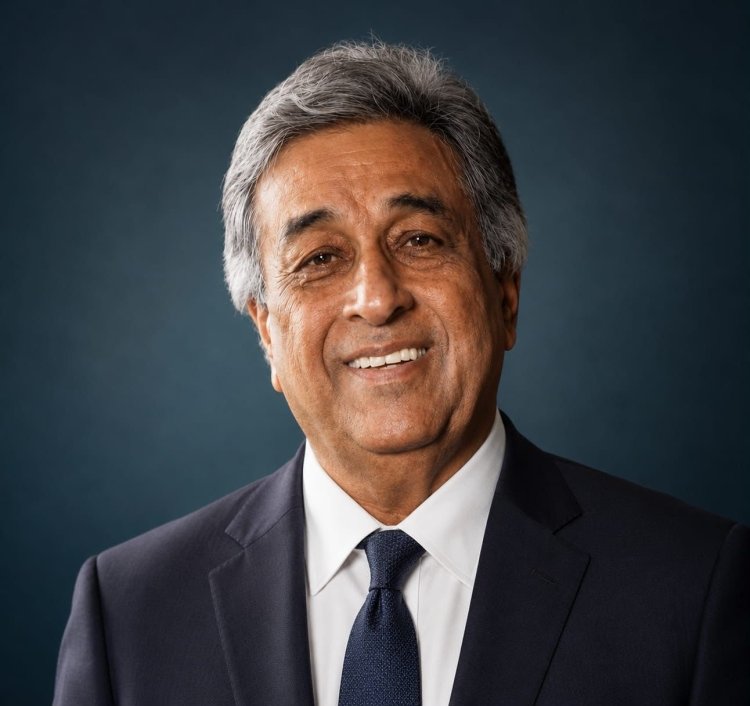
There is a stage in professional life when experience is no longer the problem. Neither is knowledge. A person may have spent decades building businesses, leading teams, making difficult decisions and achieving goals that once seemed ambitious. Yet some questions remain surprisingly difficult to answer. Should I take the next opportunity or walk away? Is this the right time to change direction? Why does a decision that appears straightforward on paper still feel unclear? And what happens when the usual people around you are not the people with whom you can discuss the real question?
It is in this space that *Dr Rakesh Chopra, Visionary Strategist and Transformational Leadership Mentor, has developed his approach to *Individual Wisdom Mentoring. Rather than positioning mentoring as another structured course or a conventional advisory session, Dr Chopra offers a confidential one-to-one conversation designed around the individual's most important challenge at that particular moment. The premise is simple: sometimes what a person needs is not another framework, another presentation or another opinion, but the opportunity to step away from the noise and think clearly with someone who brings decades of experience to the conversation.
Dr Chopra's own professional journey gives context to that approach. An MBBS by background, he has spent more than four decades studying human behaviour, leadership, decision-making, business growth and the deeper dimensions of human potential. His work has reached more than one million people across six countries through individual mentoring and group learning. Over that period, his focus has increasingly moved towards a question that sits beneath many professional problems: what is really driving the situation a person is facing, and what would change if they could see it more clearly?
The Individual Wisdom Mentoring program is deliberately designed without a fixed agenda. The person coming into the session brings the issue that is most alive for them, whether it is a business decision, a leadership difficulty, a professional transition, a recurring relationship problem or a question about the direction of the next chapter of their life. Dr Chopra's role is to listen, identify patterns and look beneath the immediate symptom rather than simply responding to the surface-level problem. The program describes this as bringing pattern recognition developed across more than one million conversations, together with direct, honest and compassionate counsel.
That distinction becomes particularly relevant for people who have already achieved a degree of success. The challenges faced by an emerging professional and those faced by a founder, CXO or business leader can look very different, but both can reach moments where conventional advice stops being useful. A senior executive may be dealing with a leadership transition or a decision involving an entire organisation. An entrepreneur may be struggling with a business problem whose real source is personal or behavioural. Someone else may have achieved professional success but still feel uncertain about what the next stage should look like.
So what happens when the problem is not a lack of information, but a lack of clarity?
That is where the one-to-one nature of the mentoring becomes important. The session provides a private environment in which the individual does not have to present the polished version of a situation that might be shown to a board, colleagues, clients or even family members. The Individual Wisdom Mentoring page specifically describes the need for a confidential space where people can discuss the actual situation rather than the version they normally present to others.
The conversations can cover a surprisingly broad range of issues. Leadership and decision-making are common themes, including decisions that have remained unresolved, leadership patterns affecting a team, difficult professional relationships and transitions involving roles, exits or succession. Other conversations move inward, addressing chronic stress, exhaustion, loss of direction or the gap between how a person performs publicly and how they understand themselves privately. Business strategy, vision, family business dynamics and questions of legacy can also become part of the discussion.
This is where Dr Chopra's broader philosophy becomes connected to the mentoring experience. His work is built around the idea of *Absolute Inner Freedom, which he does not describe as something reserved for the end of a successful life, but as an inner foundation from which a person can meet responsibility with greater clarity and balance. His guiding belief, *“Wisdom is the bridge between what you say and who you are,” reflects the distinction he makes between simply possessing knowledge and being able to use experience with discernment.
His Wisdom Transfer Process™ is another expression of that philosophy. The framework is designed around converting accumulated knowledge and experience into practical wisdom, stronger judgment and decisive action. In an environment where leaders already have access to enormous amounts of information, the ability to distinguish what matters, understand the deeper pattern and act appropriately can become more valuable than acquiring yet another piece of information.
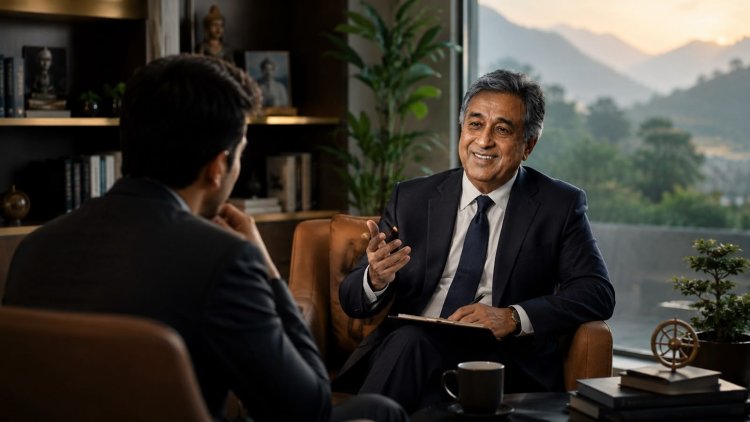
The mentoring itself is intentionally focused. The Individual Wisdom Mentoring offering is structured as a dedicated one-to-one session, available in person or online, with different formats available for individual leaders, entrepreneurs and corporate-sponsored executives. For senior and mid-level executives, the program includes single sessions or three-session engagements, while C-suite and board-level leaders have dedicated executive mentoring options. Entrepreneurs and independently sponsored individuals can also access individual mentoring sessions.
What makes the concept particularly relevant today is that professional success has created its own form of complexity. Leaders are expected to make decisions quickly, manage uncertainty, remain effective under pressure and simultaneously navigate personal responsibilities. The higher someone rises, the fewer places they may have where they can openly examine uncertainty without worrying about how that uncertainty will be perceived.
Dr Chopra's mentoring model attempts to create exactly that space.
His approach is not presented as a promise that every difficult decision will suddenly become easy. Instead, it is about creating the conditions in which the individual can see the situation more clearly, question assumptions that may have gone unexamined and understand what may be underneath the immediate challenge. The goal is not to replace the person's judgment, but to strengthen it.
That is perhaps the most important distinction between advice and wisdom mentoring. Advice often tells someone what they should do. Wisdom mentoring asks deeper questions about why they are facing the situation, what they may not be seeing and what kind of decision is consistent with who they want to become.
For Dr Rakesh Chopra, that work represents the natural extension of more than four decades spent studying people, leadership and human behaviour. His Individual Wisdom Mentoring is ultimately built around a deceptively simple proposition: there are moments when one good conversation can change the way a person sees a problem.
Sometimes the answer is not another strategy.
Sometimes it is clarity.
And for leaders carrying responsibilities that cannot easily be discussed elsewhere, finding the right space to reach that clarity may be one of the most valuable decisions they make.
Website: https://drrakeshchopra.com/
Email: DrChopraRakesh@gmail.com